
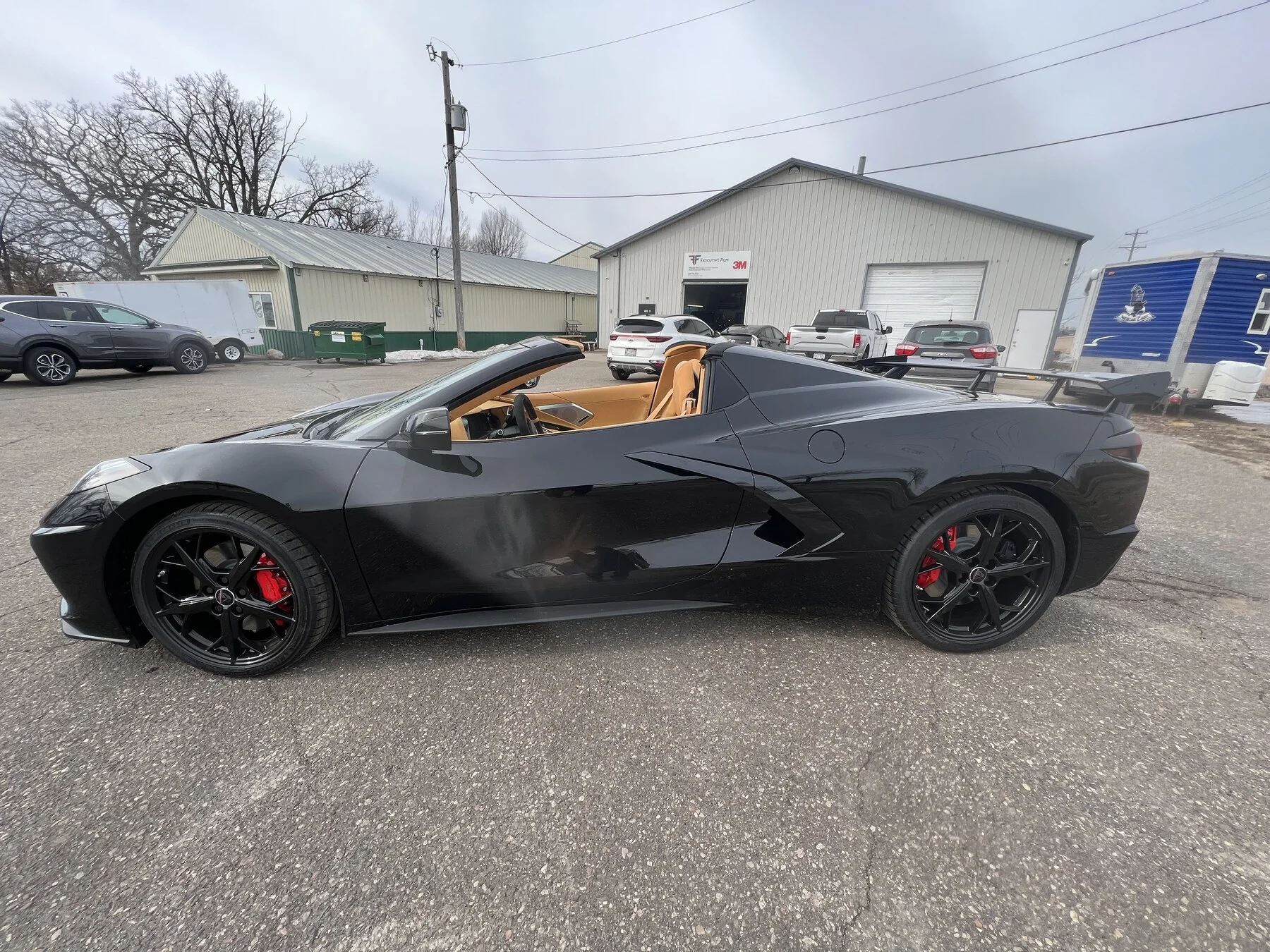
PPF vs. Ceramic Coating: Which Does Your Minnesota Car Need?
Choose paint protection film when your priority is reducing rock chips on covered panels. Choose ceramic coating when your priority is easier cleaning and a well-maintained finish. The two do different jobs, and combining compatible products can address both needs.
November 13, 2026 · 7 min read
The difference is physical protection versus surface care
Paint protection film, often called PPF or clear bra, is a sheet of protective material fitted over painted panels. It creates a sacrificial barrier between the covered finish and many everyday impacts or abrasions. Protection ends where the film ends, and a hard enough strike can still damage the film or underlying paint.
Ceramic coating is a liquid-applied treatment that cures on the prepared surface. Its water-repelling behavior and resistance to some contaminants can make washing easier and help preserve the appearance of a polished finish. It is not a thick impact-absorbing layer and should not be purchased as a substitute for chip protection.
- Rock chips and road grit: prioritize PPF on the exposed panels.
- Dirt release and routine washing: consider ceramic coating.
- Existing swirls or haze: assess paint correction before either treatment.
- Both impact exposure and easier upkeep: discuss compatible film and coating together.
For Minnesota highway miles, start with the exposed paint
A vehicle driven regularly on I-94, Highway 10, Highway 15, or Highway 23 can encounter road grit and loose debris. Rather than selecting protection by vehicle price alone, consider mileage, road conditions, how long you expect to keep the vehicle, and where your last car picked up chips.
PPF coverage can focus on the bumper and leading surfaces or extend to complete front panels and lower impact areas. Ceramic coating on an uncovered hood does not give it the same protection as film. If stone damage is the main concern, define the film coverage first.
For easier cleaning, understand what coating can and cannot do
Minnesota ownership also means winter residue, summer bugs, pollen, and repeated washing. 3M describes its professional ceramic coating as a hydrophobic treatment with chemical resistance to road salts and other exposures. That is useful surface-care performance, not a promise that contamination can safely remain on the vehicle.
A coated car still needs washing and drying. Bird droppings, mineral deposits, and bonded contamination can still leave marks, especially if neglected. Avoid treating water beading as proof that a surface is clean or that it cannot stain. Neither coating nor PPF protects untreated seams or the underbody from corrosion.
Can you put ceramic coating over PPF?
Yes, when the specific film and coating are compatible and installed according to their instructions. 3M identifies compatible film series for its coating and ties warranty compatibility to following its application directions. That should not be generalized into a claim that every coating is suitable for every film.
A coordinated project generally assesses and prepares the paint, installs film on the selected areas, and applies an approved coating afterward once the film is ready. Tell the installer about any coating already on the vehicle: a water-repelling surface can interfere with film adhesion and may need additional preparation. Product instructions determine the actual sequence and waiting periods.
- Confirm the exact film and coating combination.
- Ask which panels receive film and which receive coating only.
- Review preparation, curing, care, and warranty conditions before scheduling.
- Keep the product documentation with your vehicle records.
Paint correction is a separate decision
Neither film nor coating removes existing chips, scratches, or oxidation. A shiny new protective layer can leave underlying defects visible. Paint correction uses polishing to improve suitable surface defects; deep damage, failing clearcoat, or corrosion may need repair rather than more polishing.
An inspection should determine what the finish needs. A new vehicle is not automatically defect-free, while an older vehicle does not automatically require aggressive correction. The goal is a sound, clean finish worth protecting—not unnecessary removal of clearcoat.
Choose around your actual ownership plans
For a highway commuter worried about a peppered front bumper, start the conversation with PPF coverage. For an owner primarily seeking easier washing and a consistent gloss finish, coating may be the more relevant first discussion. For a vehicle with both needs, targeted film plus compatible coating can be a practical combination without assuming full-body film is necessary.
Executive Film offers PPF, paint correction, and 3M Ceramic Coating from one Waite Park shop at 810 Sundial Dr, Waite Park, MN 56387. Bring your vehicle's condition, driving pattern, and priorities to a free-estimate conversation so the recommendation follows the use case rather than a generic package.